
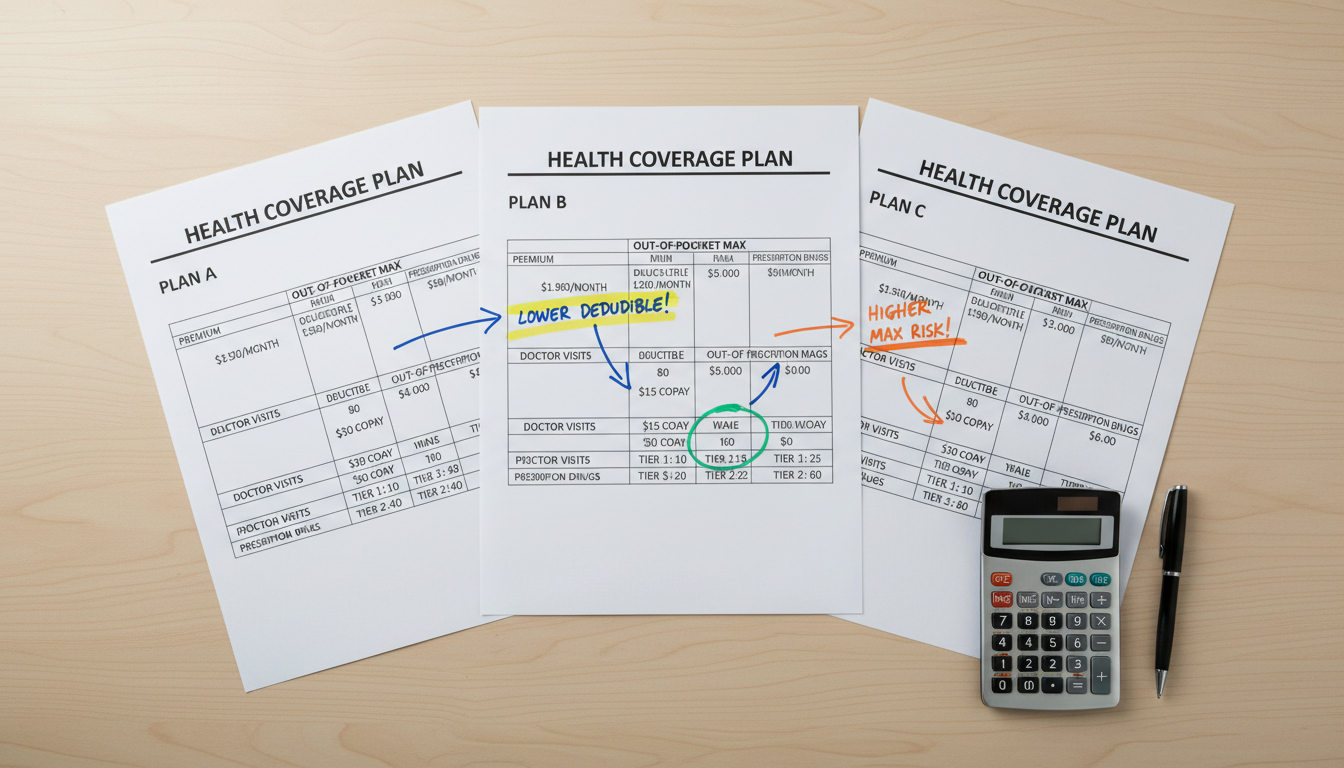
Health insurance premium increase 2027 as median proposed rates are projected to rise by 15%. These statewide increases range from 6.5 to 22.4%, making it essential for individuals to utilize above-the-line tax deductions and evaluate Marketplace options to offset growing healthcare costs.
The 2027 Health Insurance Landscape: Preparing for the Median 15 Percent Spike
Recent data from 276 insurers across the United States reveals a challenging outlook for the upcoming year. The median proposed health insurance premium increase for 2027 is currently hitting 15 percent; however, some states are seeing proposed hikes as high as 22.4 percent. These figures do not exist in a vacuum. They follow a significant median finalized increase of approximately 20 percent in 2026, creating a compounding financial effect that disproportionately impacts those paying full price for their coverage.
For professionals and business owners in Miami and across the US, these percentages represent a direct hit to post-tax cash flow. While much of the national conversation focuses on the stability of the subsidized market, the unsubsidized sector lacks the insulation provided by ACA tax credits. When premiums rise, the unsubsidized individual bears the entire weight of the increase. A 15 percent jump on a plan that was already adjusted upward by 20 percent the year prior results in a total cost trajectory that far outpaces standard medical inflation.
Maintaining the status quo is becoming an expensive strategy. For healthy individuals, these rising costs often mean they are paying a higher entry price to support a broad risk pool without receiving a proportional increase in value or service quality. Navigating this landscape requires exploring strategic health insurance options that leverage medical underwriting and personalized structures. To see how these market shifts specifically impact your current plan, you can request a personalized guidance session for a detailed analysis of your 2027 outlook.
Why Professionals Feel the Brunt of Double-Digit Hikes
The primary reason for this acute financial impact is the lack of a "subsidy buffer." For households qualifying for the Advance Premium Tax Credit (APTC), the federal government often absorbs the majority of a premium hike. If an insurer raises rates by 15%, the subsidy frequently scales upward to ensure the individual's contribution remains capped as a percentage of their income. High-earning professionals in Miami, however, operate above these thresholds. For these individuals, the high earners health insurance premium increase 2027 is a literal, dollar-for-dollar reduction in monthly cash flow.
The drivers behind these 2027 rates are structural. Prescription drug costs, particularly the surge in demand for high-cost GLP-1 medications and specialty biologics, are placing unprecedented pressure on insurer loss ratios. Furthermore, the healthcare sector is still navigating the tail end of medical inflation; increased labor costs for hospital staff and contract renegotiations with large provider systems have finally matriculated into the premiums charged by major carriers.
For the healthy professional, the frustration is twofold. Not only are costs rising, but the value proposition is eroding. Most standard plans are "guaranteed issue," meaning the premium is calculated based on the average health of the entire population, including those with chronic, high-cost conditions. When a healthy individual remains in this pool, they are effectively providing a massive cross-subsidy to the insurer's highest-risk members. In essence, you are paying a premium price for a risk profile that does not reflect your own.
Navigating this landscape requires moving beyond the traditional marketplace. By exploring strategic health insurance options, it is possible to find structures that reward health rather than penalize it. To understand how your specific income level and health status interact with the 2027 rate filings, you can request a personalized guidance session for a clear, data-driven analysis of your alternatives.
Stop Overpaying: How to Audit Your Coverage Before Renewing

Reacting to the 2027 health insurance premium increase requires more than a cursory glance at your monthly bill. Effective renewal management begins with calculating the Total Cost of Ownership (TCO). This metric accounts for the fixed cost of premiums plus the variable liability of medical expenses, weighted against the actual quality of the network. A tactical audit should move beyond the summary page and focus on three critical vectors.
Network Integrity and PPO Access: In Miami, the value of a plan is often dictated by its provider list. Many lower cost options utilize restrictive EPO or HMO models that exclude premier facilities like the University of Miami Health System or Baptist Health. For high earners, the ability to bypass gatekeepers and access specialists directly is a functional necessity. If your current renewal moves you toward a narrow network, you are paying more for significantly less autonomy. Confirm that your plan maintains true PPO status before committing to another year.
Escalating Out-of-Pocket Maximums: While the monthly premium is the most visible number, the maximum out of pocket (MOOP) is your true financial exposure. Carriers frequently raise these limits in tandem with premium hikes. A plan that appears stable might actually be shifting thousands of dollars in potential liability onto your shoulders. When auditing, compare the MOOP from 2026 to the 2027 proposal to ensure your catastrophic protection hasn't eroded.
Eliminating Plan Bloat: Most standard marketplace plans are designed for the average user, meaning they are loaded with essential health benefits that healthy professionals rarely utilize. You are essentially subsidizing services you do not need, such as high-frequency low-value care that is priced into the general risk pool.
Healthy professionals often find the highest ROI by decoupling routine care from their catastrophic coverage. In a traditional plan, you pay a premium price for first-dollar coverage you may never use. By selecting strategic health insurance options that focus on major medical protection while managing routine costs separately, you can often secure a PPO network and lower your fixed monthly costs by 30 to 40 percent. To see how these variables apply to your specific portfolio, you can request a personalized guidance session to begin your 2027 audit.
Strategic Alternatives for Healthy Professionals in Florida

Generic enrollment is a clerical exercise; strategic advisory is a financial discipline. For professionals in Miami, the default behavior is often to renew existing marketplace plans or select the most expensive option available on a public exchange, assuming higher cost equates to better care. However, the public marketplace (ACA) is designed for broad accessibility, not financial efficiency for the healthy. Because these plans are guaranteed issue, the premiums are mathematically structured to cover the costs of the entire population, including those with chronic, high cost conditions. As a healthy professional, you are effectively paying a social tax to subsidize a risk pool you do not utilize.
Moving beyond the public exchange allows you to access private market plans that utilize medical underwriting. While the marketplace must accept everyone regardless of health status, private plans can select their members based on health history. For a healthy individual, this shift in the risk pool is transformative. Instead of paying a premium that accounts for the high earners health insurance premium increase 2027 seen in the general market, you are priced based on your actual medical data. This often results in significantly lower monthly costs while maintaining, or even expanding, access to premier PPO networks.
Selecting strategic health insurance options requires a departure from the one size fits all mentality of the ACA. In a private, underwritten structure, your health becomes a financial asset that grants you access to preferred rates. This is not about cutting corners on coverage; it is about precision. By separating yourself from the general population pool, you avoid the compounding medical inflation that plagues the public sector. To determine if your health profile qualifies you for these private market efficiencies, you can request a personalized guidance session to review the specific underwriting criteria and network advantages available to Florida professionals.
Tax Efficiency and the Self-Employed Professional
For self-employed professionals in Miami, the tax code offers a specific lever to mitigate rising costs: the 100 percent above-the-line deduction for health insurance premiums. This provision allows business owners to subtract their total health coverage costs from their gross income, which directly lowers their Adjusted Gross Income (AGI). While this is a critical tool for tax efficiency, it often leads to a false sense of security regarding the high earners health insurance premium increase 2027. A tax deduction is not a subsidy; it is merely a reduction in taxable liability.
Mathematically, paying for an overpriced, bloated plan simply to capture a larger deduction is a losing strategy for capital preservation. If a business owner in the 37 percent federal tax bracket pays an extra $1,000 in monthly premiums for a plan filled with unnecessary benefits, they are still losing $630 in post-tax cash flow. The goal should be to maximize the quality of coverage while minimizing the gross premium through strategic health insurance options. By utilizing medically underwritten plans that reflect your actual health status, you can lower the total premium significantly. This approach ensures that you are not overpaying for coverage just to receive a fractional tax benefit. To analyze how your 2027 premium projections align with your tax strategy, you can request a personalized guidance session for a detailed cost-benefit breakdown.
2027 Renewal FAQ: Subsidies, Income Limits, and Timing
Clear answers to frequently asked questions are essential for navigating the 2027 health insurance premium increase. Success in this landscape depends on understanding the mechanics of eligibility and the local Miami market.
What is the maximum income to qualify for a health insurance subsidy in 2027? The traditional subsidy cliff remains suspended, meaning there is no hard income cap to qualify for financial assistance. However, eligibility is determined by a sliding scale where your contribution is capped at 8.5 percent of your household income for a benchmark Silver plan. For a professional earning $250,000, this calculation often results in zero actual credit, as the premium cost rarely exceeds that 8.5 percent threshold. In this bracket, individuals are almost always better served by exploring strategic health insurance options that bypass the public marketplace entirely.
How much is health insurance per month for the self-employed in Miami? Based on current market data for the Miami area, a healthy individual in their late 30s or early 40s should expect monthly premiums for a standard PPO plan to range between $650 and $1,200. Families typically see costs between $2,200 and $3,400 per month. These figures represent the base cost before accounting for any strategic health insurance options that might leverage medical underwriting to reduce those rates.
When is the best time to start comparing plans for 2027? Begin your review at least 60 days before the new year. Unlike the instant approval of marketplace plans, private market alternatives often require a more detailed underwriting process to verify your health status. Starting in early November ensures you have ample time to secure a preferred rate and transition away from a bloated plan. You can request a personalized guidance session now to begin building your 2027 strategy.
Navigating the 2027 renewal landscape requires a proactive approach to ensure your coverage remains both comprehensive and cost-effective. While rising premiums present a significant challenge, they also offer a valuable opportunity to reassess your current strategy. If you want expert help refining your health insurance plan, our team is here to provide personalized guidance. You can Explore Options that align with your unique financial goals and healthcare needs. Taking the time to review your approach now can lead to much greater long-term stability.